


































What eCommerce leaders said about AI, automation and the future of operations, and what it means in practice
September 9, 2026
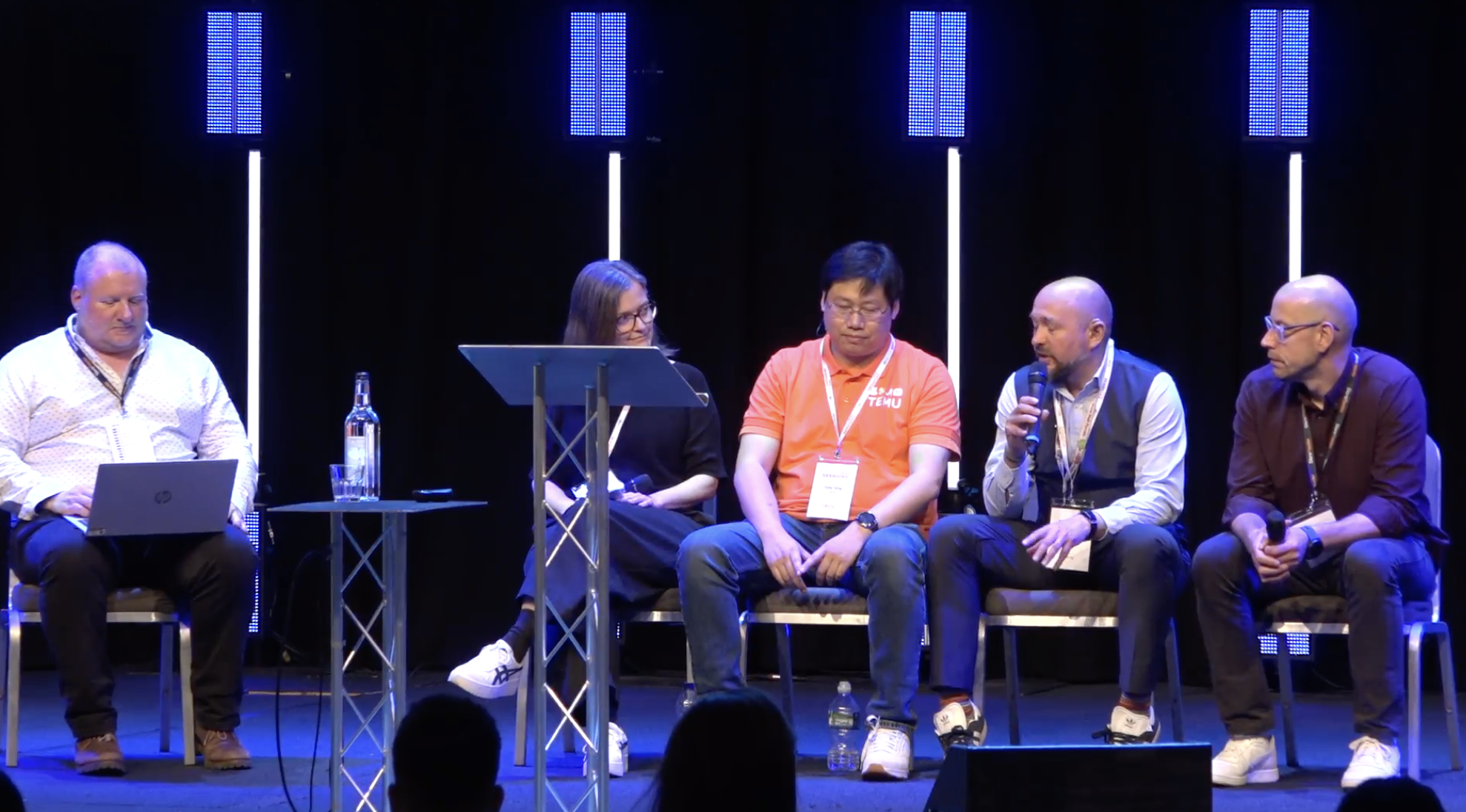
I hosted the industry leaders panel at StoreFeeder Sessions 2026, a new addition to the day, with Anneliese Pickard from eBay, Tony Tong from Temu, Jon Reeves from Royal Mail and our own Brian Williamson. The point was to hear where eCommerce is heading from people building it, rather than watching from the sidelines.
AI came up, as it does, but what made it worth listening to was the question I put to all four: where does AI create meaningful commercial impact, rather than just operational efficiency? The answers were more specific than I expected and considerably more cautious.
Where the commercial value actually sits
Brian's answer was less about automation itself and more about signals and knowing what is happening in your business quickly enough to act on them: which lines are loss leaders, where cash is tied up in stock, and where you are missing opportunities. AI taking repetitive tasks off people has been understood for a while, so the stage we are at now is different – the focus should be on giving AI the right information so it can give back the right output to base decisions on. The businesses that get this part right will be ahead of their counterparts.
Tony gave the most concrete example of the day, covering Temu’s use of AI to scan more than 38 million listings and over 9 million keywords, allowing the business to catch bad listings before they go live. Previously, problems only surfaced after a customer had already had a poor experience. Shifting from a reactive approach to a proactive strategy has strengthened customer trust and driven repeat sales, clearly demonstrating tangible commercial value.
Anneliese framed her response around quality rather than speed. Creating a listing quickly is useful; however, creating a better listing that converts is worth more. Similarly, answering a seller quickly is useful, whereas answering in a way that builds their confidence is worth more in the long term. On top of that, AI also surfaces opportunities nobody would otherwise spot.
Three different businesses, three different answers, and yet none of them led with efficiency.

Everyone drew the same line on human oversight
The consistency here is noteworthy.
Jon was open that Royal Mail is still early in its AI journey, using it to analyse data and examine processes. They’re not removing the human element. His takeaway phrase was “you always co-pilot, verify, and double-check”. He was also firm on customer communication, confirming they have no interest in the endless chatbot loop, as a bad experience means the customer just doesn’t come back.
Tony then added that it is “too soon" to be relying completely on AI, despite Temu’s grand scale. Alongside the systems monitoring millions of listings, Temu runs one of the largest global content moderation teams in the industry, with several thousand people adding human judgement to the automated layer. He views this approach as a competitive advantage rather than a cost.
The position was the same across a marketplace, a retail platform, and a carrier. AI is generating genuine commercial value now, but at this stage, people still need to oversee it. And this is precisely how we’ve built our own AI listing and connector tools: the system researches and recommends, but you always confirm.
Software or the warehouse floor?
I asked Brian and Jon where the real complexity will sit as operations become more automated: is it in the software layer or in the physical network?
Brian's answer was both. Software has to forecast, work for you, and tell you things you’ve not spotted. But you also need processes embedded in the warehouse that don’t depend on particular people being in that day, which is the same argument I made in my session on operational maturity. Build processes the business can scale with so that when sales double, or an eBay Live session delivers a sudden uplift, you can already deliver on it.
Approaching it from a network perspective, Jon highlighted data as the key driver. To manage volume and identify bottleneck locations effectively, Royal Mail relies on accurate customer forecasting data to anticipate incoming flow and delivery routes. He gave the example of traffic to Northern Ireland, where ferry capacity is finite - they read the forecast data, make capacity judgements against it, and treat a sudden spike as a red flag to investigate rather than absorb.
Both answers lead to the same place: the software and the operation are not two distinct problems.
What sellers are underestimating
My closing question: “What will have fundamentally changed in three years that sellers are underestimating today?”
Anneliese's answer is one to put in front of any retailer: it’s not AI itself, it's the connection points. As commerce becomes more software-mediated, clean data and strong integrations become the thing everything else depends on, because AI is only as good as the data and connections behind it. The industry leaders will be those who get their systems working together properly, which is the same conclusion Brian reached in his session on using warehouse data correctly.
Refocusing on core fundamentals, Tony highlighted customer satisfaction as a central pillar. He explained that Temu intentionally rewards merchants delivering outstanding service (measured by return rates, customer reviews, and high retail benchmarks) because UK shoppers have extensive choices and very little patience for errors. In his view, platforms will increasingly direct traffic toward high-satisfaction sellers rather than those with the highest ad spend.
Jon echoed Tony’s sentiment: get the basics right and be consistent, because consistency underpins trust, and trust is what a business lives or dies on.
Brian answered as a consumer and went furthest, questioning how much life is left in the graphical interface and whether product search survives in its current form. An agent that knows your buying history, suggests what you need, takes one confirmation, and handles the purchase and the tracking is entirely possible within three years.
What to take away from it
The businesses moving forward are the ones building AI into how they operate, but nobody on the stage argued for handing over complete control.
Every one of them described the same approach: use AI for the slow, repetitive, data-heavy work, keep people on the judgement calls, and make sure the data you use is clean and connected enough for it to work properly.
To see what this foundation looks like against your own setup, book a demo, and we’ll walk through it with you.


