




































10 common warehouse problems, and how to fix them









.svg)
What we'd usually complete by close of business on Wednesday, we're now completing by Monday afternoon. This isn't just improvement; it's a complete overhaul in efficiency & productivity.

Why warehouse problems get worse as you grow


The 10 most common warehouse problems, and how to fix them
Each problem below has a clear cause and a practical fix. Most come back to the same root: paper lists, spreadsheets and processes that rely on memory.
Wrong items sent to customers
Mis-picks usually come from paper pick lists, similar-looking SKUs and tired staff at peak. Each one costs you twice: the return and the replacement. Most UK sellers put the cost at £15–£30 per error.
Scan the location and the product at every pick, then scan again at the packing bench. StoreFeeder rejects a mismatch before the label prints. StoreFeeder customers average 99.95% picking accuracy.
How to reduce picking errors →Stock levels you can't trust
The system says you have it, but nobody can find it. Untracked moves, manual adjustments and slow channel updates lead to overselling, cancelled orders and endless stock counts.
Give every item a location, scan every movement and sync stock to every sales channel automatically, so what you sell matches what's on the shelf.
Inventory management software →Pickers walking too far
Paper lists send pickers back and forth across the warehouse, and picking one order at a time multiplies the walking on every shift.
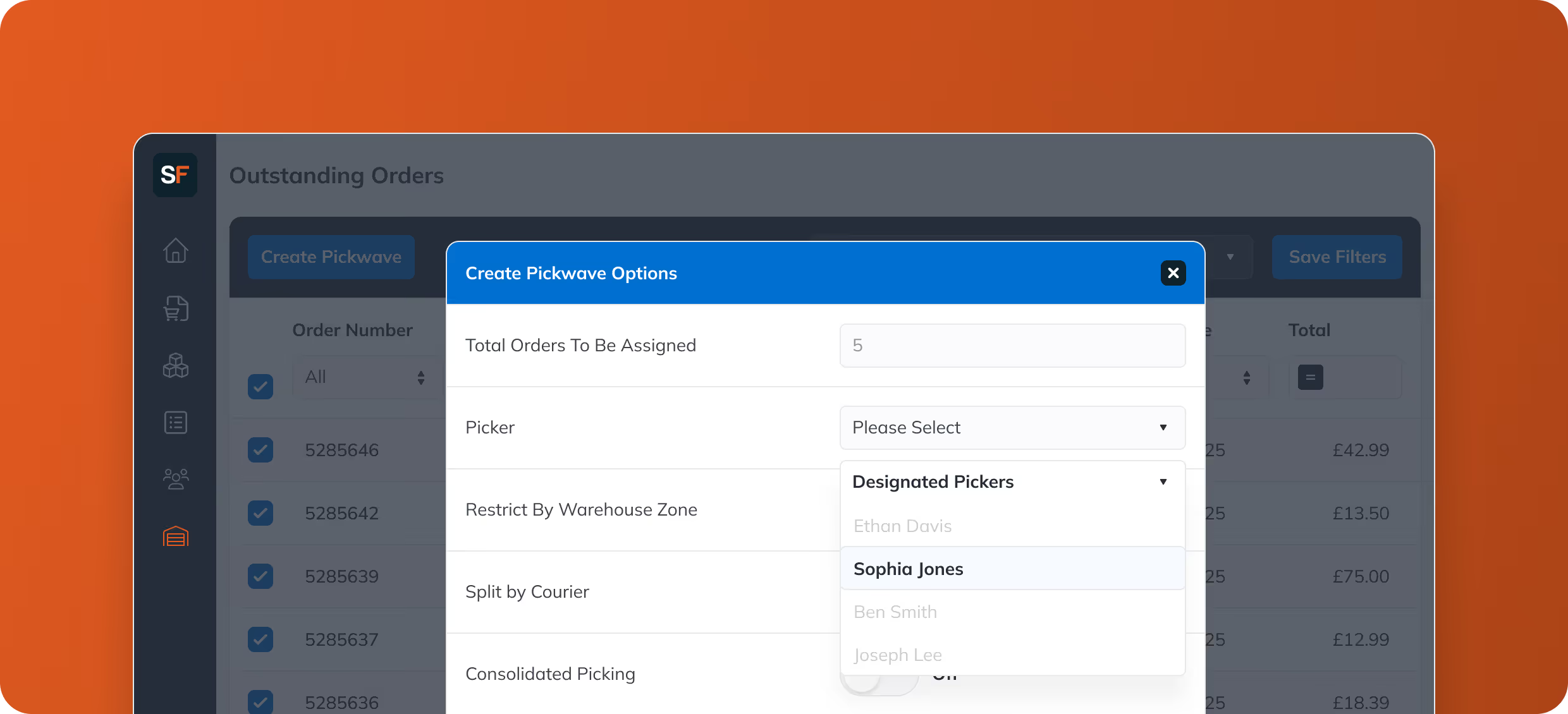
Use optimised pick routes with batch, wave, zone or tote picking, so each trip collects more orders in fewer steps. Customers save 5–10 hours a week on pick routes.
Picking and packing software →Missing courier cut-offs
Orders pile up at the packing bench, labels are made by hand and the last collection turns into a scramble.
Courier rules choose the right service automatically, labels print on a single scan and bulk despatch clears the queue. Wave picking can release work in cut-off order.
How to speed up despatch without adding errors →Orders scattered across sales channels
Your website, Amazon, eBay and other marketplaces all need checking. Manual imports and copy-and-paste create delays and mistakes.
Pull orders from 40+ sales channels into one queue, with stock levels and despatch updates sent back to each channel automatically.
How marketplace integrations keep stock accurate →Goods-in that takes all day
Deliveries sit waiting to be checked. The stock is in the building, but you can't sell or pick it until someone books it in.
Receive deliveries on a handheld against the purchase order, with a barcode check on every line, then put stock away into tracked locations so it's ready to sell straight away.
Warehouse booking-in system →Too much depends on one person
When your most experienced picker is off, nobody knows where things live or how orders really get out of the door.
The handheld tells staff where to go and what to scan, so no product knowledge is needed. New starters are productive in about 5 minutes.
How to onboard warehouse staff in minutes →No clear view of what's happening
You only find out about a picking backlog or a stock problem when someone raises it, usually too late to fix before the cut-off.
Track picking, packing and despatch live, with real-time reporting on order progress, stock and team performance. Every action is timestamped for a full audit trail.
Warehouse management software →Stock spread across multiple sites
Overflow areas, second warehouses and quarantined goods make it hard to know which stock is actually ready to ship.
Manage stock by site, aisle, rack and bin, ring-fence quarantined stock and track transfers between warehouses in real time.
Multi-warehouse management →Growth means hiring more people
As orders rise, headcount rises with them, because manual processes only scale by adding staff.
Automate the repetitive steps, from order import and courier selection to picking and despatch, so the same team handles more orders. Kukoon Rugs ships up to 3,000 orders a day on StoreFeeder.
How to scale warehouse operations as orders grow →after fixing these problems


Inventory System

Management

Warehouse Solution

Packing Software
Frequently asked questions
What are the most common warehouse problems?
How do you reduce picking errors in a warehouse?
What is a good picking accuracy rate?
How do you improve stock accuracy in a warehouse?
Is StoreFeeder right for my warehouse?
Do I need extra hardware to scan and pick?
How long does it take to get started?
How much does warehouse management software cost?


See how StoreFeeder fixes these problems in your warehouse
.svg)


