

















EU €3 customs duty and €2 handling fee: what UK sellers need to know
October 7, 2026
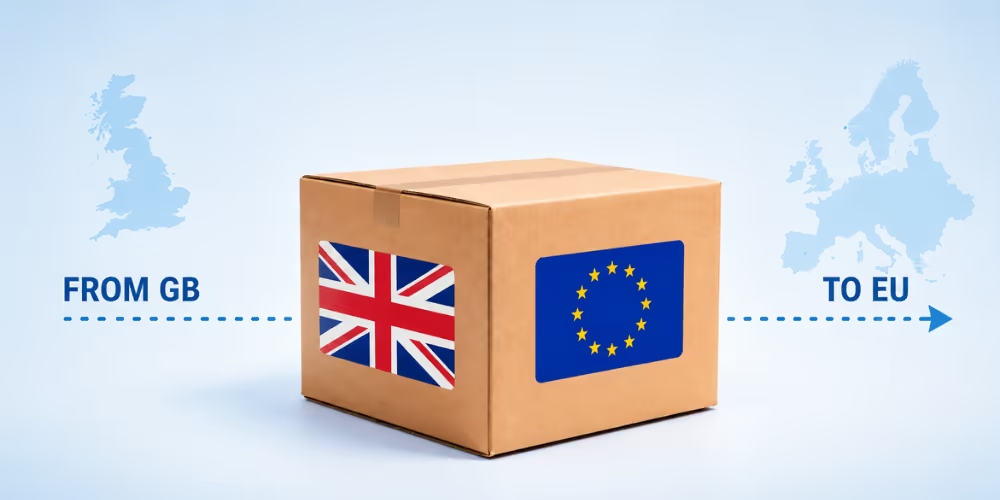
Updated 27 October 2026. Since 1 July 2026, parcels sent from outside the EU to consumers in the EU no longer travel duty free under €150. A €3 customs duty now applies, and from 1 November 2026 an EU handling fee of €2 per item is added on top. This guide explains what has changed for UK online sellers, what the charges look like on a real order, and the practical steps worth taking in your despatch process.
Important: this article is general information only. StoreFeeder cannot provide customs, tax, courier or legal advice. Speak to your carrier, courier or a professional adviser about how the rules apply to your own shipments. You can read the official UK guidance on the Gov.uk EU customs reform page.
What changed on 1 July 2026: the €3 customs duty
The EU removed the customs duty exemption for parcels valued at €150 or below. Goods sent by businesses outside the EU to EU consumers now attract a temporary €3 customs duty. According to the Council of the EU, the duty applies to each different item in a consignment, grouped by tariff heading, rather than once per parcel. It is a temporary measure, due to run until July 2028, after which normal tariff-based duties are expected to apply to these goods.
In practice, the number of different tariff codes in a basket matters. A parcel containing three T-shirts with the same tariff code may attract one €3 charge, while a parcel containing a T-shirt and a pair of shoes may attract two.

What changes on 1 November 2026: the €2 EU handling fee
On 21 September 2026 the European Commission adopted a delegated regulation setting the new Union handling fee at €2 per item. It was reported as published in the Official Journal on 22 October 2026, which means it applies from 1 November 2026. Three points matter for UK sellers:
- It is per item, not per parcel. Like the €3 duty, it is charged per customs item, so a basket of several different products can attract several fees.
- It is in addition to the €3 duty and VAT. It does not replace either.
- It is not limited to parcels under €150. The €3 duty only applies to consignments of €150 or less, but the handling fee applies to goods sold at a distance to EU customers at any value.
The fee is payable by whoever is responsible for the other customs charges on the goods, which in practice usually means your carrier passes it on to you or to your customer, depending on whether you ship duties paid or unpaid. Ask your carrier how they will bill it.
What this looks like on an order
Take a parcel under €150 containing a T-shirt and a pair of shoes, two different tariff codes. From 1 November, assuming each counts as a separate item, it could attract two €3 duties and two €2 handling fees: €10 in charges on top of VAT. A parcel of three identical T-shirts declared on one line could attract €5. That difference is why accurate HS codes and how lines are presented on the customs declaration now matter so much.
What is still uncertain
Couriers and customs systems do not all handle the charges in the same way yet. The main open question is how each carrier counts items: per line on the CN23 customs declaration or per unique HS code in the parcel, and whether they combine matching lines themselves before submitting the data. Until that settles, how you present the same goods on the CN23 could change how many charges apply.
What UK sellers should do now
1. Get your HS codes and country of manufacture right
Both charges are driven by how goods are classified and declared, so every product you ship to the EU needs an accurate HS code and country of manufacture. Missing or inconsistent codes can lead to extra charges, delays or returned parcels. Carriers are also asking for fuller product data on low-value shipments, so check what your carrier requires.
2. Consolidate matching customs lines
If several products in an order share the same HS code and country of manufacture, declaring them as one combined CN23 line rather than several separate lines may reduce the number of charges, depending on how your courier processes the data.
3. Speak to your carrier or courier
Ask your carrier how they calculate the €3 duty and the €2 handling fee, whether they consolidate matching lines, and how they will bill the handling fee from 1 November. The answer may differ between couriers and services.
4. Review pricing for EU orders
Extra duty and fees hit low-value, low-margin items and mixed baskets hardest, and the handling fee now applies to higher-value orders too. Review your EU pricing, delivery charges and minimum order values using your own order data and margins, and decide whether to absorb, pass on or restructure these costs.
How StoreFeeder helps
StoreFeeder stores the HS code and country of manufacture against each product and submits customs data electronically to your courier with every EU shipment. It also has an optional setting to consolidate matching customs lines: when it is switched on, products in the same order with the same HS code and country of manufacture are combined into a single CN23 line with the total quantity and value. It does not change the classification or value of any product.
The setting is live for all customers but is off by default. Turn it on under Settings > Warehouse Management > Despatch Mode > Compact Custom Declaration Lines. Read the full explanation, including worked examples, in consolidating matching HS codes on CN23 customs declarations, and check with your courier that consolidated lines suit your shipments before you switch it on.
Not using StoreFeeder yet? Book a demo to see how customs data, courier labels and EU despatch work in one system.
EU customs changes: common questions
Does the €3 EU customs duty apply per parcel or per item?
The Council of the EU describes it as applying to each different item in a consignment, grouped by tariff heading. Several units with the same tariff code may therefore attract one charge, while different products with different codes may attract one charge each. How each courier applies this in practice can vary, so confirm with your carrier.
Which parcels does the €3 duty apply to?
Parcels valued at €150 or less sent by businesses outside the EU, including the UK, to consumers in the EU. Goods above €150 continue to be charged duty at the EU's normal tariff rates.
Is the €3 duty the same as VAT?
No. Import VAT on low-value goods is still handled separately, for example through the EU's Import One-Stop Shop (IOSS). The €3 is a customs duty on top of VAT.
How long will the €3 duty last?
It is temporary and is due to run until July 2028, when normal tariff-based duties are expected to apply to low-value goods.
How much is the EU handling fee and when does it start?
€2 per item, from 1 November 2026. It is charged in addition to the €3 duty and VAT, and unlike the €3 duty it is not limited to parcels under €150. The Commission will review the amount every two years.
Who pays the handling fee?
Whoever is responsible for the other customs charges on the goods. If you ship duties unpaid, your customer will usually be asked to pay it on delivery; if you ship duties paid, your carrier will usually bill it to you. Check with your carrier.
Courier guidance
Your courier's own guidance is the best place to confirm how these changes affect your shipments:
This article is intended as general information only. StoreFeeder cannot provide customs, tax, courier, legal or compliance advice. Businesses should speak directly with their carriers, couriers or appropriate professional advisers for guidance based on their own circumstances.
Still running your warehouse on spreadsheets or paper pick lists? See how StoreFeeder's warehouse management system runs goods-in, picking, packing and despatch in one place →Or work out what it could save you with the ROI calculator →Book a demo


